

The Path to Genuine Happiness Through Self-Development

What is Happiness?

Happiness is a deeply personal and multifaceted experience, yet it’s universally sought after. According to the renowned psychologist Martin Seligman, happiness, or what he refers to as “authentic happiness,” is a blend of positive emotions, engagement in life, and a sense of meaning or purpose. It isn’t just about feeling good in the moment; it’s about living a life that feels satisfying and meaningful over time. This comprehensive view aligns with the “PERMA” model, which highlights five key elements: Positive Emotions, Engagement, Relationships, Meaning, and Accomplishment.

I believe that the path to genuine happiness lies in self-awareness and understanding the various aspects of life that contribute to our well-being. True happiness is not a fleeting moment of joy but a sustained sense of fulfilment that comes from knowing who you are and what you truly value.

Self-Awareness: The Foundation of Happiness

Self-awareness is the cornerstone of happiness. It involves a deep understanding of your values, desires, and what you want out of life. Without self-awareness, it’s easy to chase after superficial or external markers of success, mistaking them for true happiness. But when you know yourself—your strengths, weaknesses, passions, and fears—you can make choices that align with your authentic self, leading to a more fulfilling and happy life.

1. What Do I Live For?

This is perhaps the most profound question anyone can ask themselves. Understanding what you live for is about identifying what you treasure most in life. For some, it might be love and relationships, for others, it could be personal freedom or the pursuit of knowledge.

  • What do I treasure in this life?
    Identifying what you hold dear is the first step in understanding your purpose. It could be your family, your health, your creative pursuits, or the impact you have on others. These treasures are the core of your happiness, the non-negotiables that give your life meaning.

2. What Facilitates Happiness in My Life?

Once you know what you live for, the next step is to consider what will make your life easier and happier. These facilitators can vary widely, but they often include:

  • Money: Financial security can significantly reduce stress and provide the freedom to pursue what makes you happy. While money alone cannot buy happiness, it can create the conditions that make happiness more attainable, such as time, health, and opportunities for experiences.
  • Loving Relationships/Partner: Human connection is at the heart of happiness. A loving relationship provides emotional support, companionship, and a sense of belonging, all of which are crucial for long-term happiness.
  • Family: Family can be a source of unconditional love and support, grounding you in your values and providing a network of care. However, it’s important to recognize that not everyone finds happiness in traditional family structures, and that’s okay. What matters is the quality of the relationships you cultivate, whether with family or close friends.
  • Freedom: For many, freedom is a key component of happiness. This can manifest in various forms:
    • Time: More leisure time allows for relaxation, creativity, and the pursuit of passions.
    • Health: Good health provides the energy and vitality to enjoy life to its fullest.
    • Travel: For some, travel represents freedom and adventure, opening up new perspectives and experiences that enrich life.

Cycle of Happiness
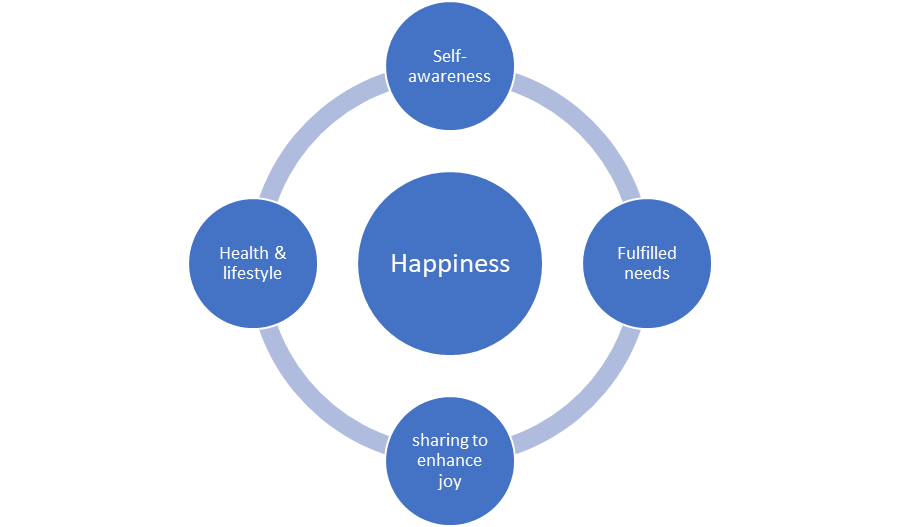
3. What Holds Me Back from Happiness?

Even with a clear understanding of what you value and what facilitates your happiness, obstacles can still stand in the way. Overcoming these barriers often requires deep introspection:

  • How well do I know myself?
    Self-knowledge is crucial for making decisions that align with your true desires. Trusting your judgment, especially in important matters, is essential for happiness. Doubt and indecision can lead to missed opportunities and regret.
  • What matters most to me?
    Prioritizing what truly matters is key. Life is full of distractions and demands, and it’s easy to lose sight of what’s important. Regular reflection on your values and goals can help you stay on track.
  • Do I know what true happiness looks like for me?
    Happiness is not one-size-fits-all. It’s important to define what happiness means to you personally, rather than adopting someone else’s definition. This might involve re-evaluating your life goals and making adjustments as needed.
  • Who do I share my happiness with?
    Humans are inherently social beings, and sharing happiness with others can amplify your joy. Building strong, supportive relationships is not only important for your happiness but also for the happiness of those around you. Joy shared is joy multiplied, creating a positive feedback loop that enhances well-being for everyone involved.

Conclusion

Happiness is a journey, not a destination. It requires continuous self-reflection, growth, and a deep understanding of what you value most in life. By developing self-awareness and focusing on the aspects of life that truly matter to you—whether it’s relationships, freedom, health, or personal growth—you can create a life that is not only happy but deeply fulfilling. Remember, true happiness is not just about feeling good; it’s about living a life that feels right for you, a life that resonates with your innermost values and desires.


Reincarnation & Past Life Regression Therapy

Unlocking the Mysteries of Reincarnation through Past Life Regression Therapy

Embarking on a journey through time may sound like an escapade into the unknown, but the practice of Past Life Regression holds the promise of uncovering profound insights and fostering personal healing. Before we explore its potential impact on relationships, let’s demystify what Past Life Regression truly involves.

Beyond Reincarnation: The Essence of Past Life Regression

Past life regression, often likened to a guided meditation or hypnosis, invites individuals to delve into the recesses of their past lives. Regardless of personal beliefs in reincarnation, this technique aims to unearth memories, emotions, and experiences from previous existences. The journey is guided by a skilled therapist, paving the way for a deep exploration that transcends the boundaries of our current understanding.

Debated Yet Confirmed Examples

While skepticism surrounds the concept, certain scientific examples have sparked debates within the community. Consider a study where participants, guided through past life regression, reported a tangible reduction in relationship-related anxiety. By tapping into past-life experiences, individuals gained insights into recurring patterns, contributing to a profound transformation in their current relationships.

In another instance, individuals grappling with unexplained fears underwent past life regression. The exploration revealed connections to past traumas, and as a result, participants reported a notable alleviation of their irrational fears. These anecdotal instances, although debated, provide glimpses into the potential therapeutic impact of past life regression.

The Path to Healing: What Lies Ahead

As we navigate the uncharted territories of our past lives, the stories and science of past life regression unfold. The debated yet confirmed examples underscore the potential for transformative healing, offering a captivating perspective on the interconnectedness of our past and present. Stay tuned as we further explore the impact of past life regression on relationships and delve into the mysteries that lie ahead.

Past Life Regression Therapy- How does it Work?

The Wonders of Past Life Regression Therapy

Embarking on a journey through time may sound like the stuff of science fiction, but the intriguing realm of Past Life Regression Therapy offers a fascinating glimpse into the enigmatic echoes of our past existences. Far beyond the realms of skepticism, scientific evidence now underscores the effectiveness of this therapeutic technique, revealing its potential to address not just mental health but also physical well-being.

Debunking Skepticism

Despite being dismissed by skeptics as a mere product of hypnosis, the science behind Past Life Regression Therapy is gaining credibility. When individuals enter a relaxed state guided by a skilled therapist, they may uncover memories from past lifetimes, leading to profound emotional healing. Some recent observations showcase the therapy’s remarkable impact on mental health, demonstrating significant reductions in anxiety, depression, and other psychological conditions.

Healing Beyond the Mind: Physical Benefits Unveiled

Delving deeper into the scientific realm, a groundbreaking study published in the Journal of Evidence-Based Integrative Medicine sheds light on the physical benefits of past life regression therapy. Patients undergoing this therapeutic journey reported a remarkable reduction in chronic pain and an enhancement in overall physical functioning. This revelation suggests that past life regression therapy takes a holistic approach, seamlessly blending mental and physical healing.

Proven Examples of the Power of Past Life Regression Therapy

Consider a scenario where a participant, skeptical at first, undergoes past life regression therapy to alleviate persistent anxiety. As the therapy unfolds, memories of a past life surface, offering profound insights into the roots of the anxiety. Subsequent sessions reveal a gradual reduction in anxiety levels, providing a tangible, measurable outcome.

In another instance, a patient suffering from chronic pain experiences relief after engaging in past life regression therapy. The therapy acts as a bridge between the psychological and physical, offering a comprehensive healing experience that extends beyond conventional treatments.

In essence, the science behind Past Life Regression Therapy is carving a path through skepticism, demonstrating that the secrets of our past may hold the keys to a more harmonious present and future. As we unlock the mysteries of our existence, the potential for transformative healing becomes an ever more enticing prospect.

Tapping into Wellness: Using Emotional Freedom Techniques (EFT)

In the realm of holistic therapies, Emotional Freedom Techniques (EFT) emerges as a powerful tool for emotional and mental well-being. Affectionately known as “Tapping,” EFT combines ancient Eastern acupressure principles with modern psychology, promising a holistic approach to healing. Let’s delve into the benefits, mechanics, and suitability of this innovative therapy.

The Benefits of EFT

EFT is celebrated for its ability to alleviate emotional distress, anxiety, and stress. By tapping on specific meridian points on the body while verbalizing emotions, individuals can release energy blockages, promoting a sense of emotional freedom. Scientifically, studies have demonstrated that EFT can significantly reduce cortisol levels, the stress hormone, offering a tangible physiological response to its efficacy.

The Mechanics of Tapping

At its core, EFT involves gently tapping on acupressure points with fingertips while focusing on specific thoughts or feelings. This process is designed to rebalance the body’s energy system and disrupt the negative thought patterns contributing to emotional distress. Research suggests that this technique may stimulate the release of endorphins, the body’s natural feel-good chemicals, providing a biological basis for its mood-enhancing effects.

For Whom the Tapping Resonates

EFT is remarkably versatile, making it suitable for various individuals seeking emotional relief. From those battling chronic stress and anxiety to individuals coping with trauma or phobias, the gentle yet profound nature of EFT makes it accessible to a broad audience. Studies have explored its efficacy in diverse populations, showcasing its potential in contexts ranging from managing post-traumatic stress disorder (PTSD) symptoms to improving overall mental well-being.

Example cases of EFT

In the scientific arena, debates surround EFT’s mechanisms, yet there are confirmed instances of its efficacy. Consider a situation where participants utilizing EFT reported significant reductions in symptoms associated with anxiety disorders, highlighting the therapeutic potential of this technique.

As we tap into the world of Emotional Freedom Techniques, the transformative benefits, and the ongoing scientific discourse underscore its potential as a groundbreaking tool for emotional healing. Join us on this journey of tapping into wellness, unlocking the doors to emotional freedom.

Are You The Gas-lighter in Your Relationship?

We’re delving into the intricate layers of gas-lighting, but with a twist! Instead of focusing solely on the victims, let’s embark on a journey to understand whether those who engage in gas-lighting are truly aware of their actions. It’s a challenging exploration, but acknowledging these complexities is the first step towards positive change. So, grab your favorite beverage, settle in, and let’s navigate the nuances of gas-lighting together.

Are Gas-Lighters Aware?

H: Gas-lighting, a term often shrouded in negativity, prompts us to question whether those who wield this power are conscious of their actions. Do they comprehend the detrimental impact they have on their partners without even realizing it? Let’s delve into this intricate web.

Deflection

Our first identifier, deflection, operates like a magician’s sleight of hand. Gas-lighters masterfully shift blame onto their partners, creating an illusion of innocence. Imagine expressing concerns to your partner, and instead of addressing the issue, they retort with phrases like “You’re too sensitive” or “You’re overreacting.”

Consider a scenario where your partner opens up about feeling neglected. Instead of engaging in a constructive conversation, you deflect the blame by saying, “You’re always making a big deal out of nothing.” In this subtle act of deflection, the gas-lighter skillfully redirects the focus, leaving the real problem unresolved.

Minimization

The second identifier, minimization, is like diminishing the magnitude of an oncoming storm. Gas-lighters downplay their partner’s emotions, making them feel insignificant. Phrases like “It’s not that big of a deal” or “You’re making mountains out of molehills” become their tools of choice.

Picture your partner sharing excitement about a personal achievement, and your response is, “Anyone could have done that. It’s not that special.” By minimizing their achievements, the gas-lighter undermines their partner’s feelings and diminishes their sense of accomplishment.

Shifting Reality

The third identifier, shifting reality, is akin to a master puppeteer pulling strings in the shadows. Gas-lighters manipulate situations, making their partners doubt their own perceptions. Phrases like “I never said that” or “You’re imagining things” become their weapons of choice.

Envision your partner recalling a promise you made, and you insist it never happened. This intentional distortion of reality leaves your partner questioning their memory, creating a sense of disorientation and self-doubt. Shifting reality becomes a powerful tool in the gas-lighter’s arsenal.

Withholding Information

The fourth identifier, withholding information, transforms communication into a strategic chess game. Gas-lighters selectively share details, crafting a narrative that aligns with their agenda. Vague responses and intentional omissions become their tactics.

Imagine your partner inquiring about your plans, and instead of providing clarity, you offer vague answers, leaving out key details intentionally. This act of withholding information empowers the gas-lighter to control the narrative, leaving their partner in the dark.

Projection

The fifth identifier, projection, is a psychological camouflage where gas-lighters cast their shadows onto their partners. In projecting their insecurities, they make their partners the unsuspecting recipients of blame.

Consider a scenario where your partner expresses concern about your commitment, and your immediate response is, “You’re the one who’s always distant and unavailable.” In projecting your own behaviors onto your partner, you not only deflect responsibility but also manipulate the narrative to suit your agenda.

What Can You Do?

Now that we’ve identified these subtle signs, let’s unravel the roadmap to transformation. What practical steps can you take to stay in check and avoid unintentional gas-lighting?

Self-Reflection

First on our journey to self-discovery is self-reflection. This isn’t just a glance in the mirror but a deep dive into the recesses of your psyche. Take time to dissect your reactions and responses, examining them under the microscope of genuine introspection.

Delve into your past experiences, exploring moments of conflict and tension. When did certain patterns of behavior emerge, and how did you contribute to the dynamics of those situations? This self-awareness isn’t just a glimpse; it’s a commitment to understanding the roots of your actions, paving the way for personal growth and positive change.

Open Communication

The second pillar of transformation is open communication. It’s not just about talking; it’s about creating a space where words flow like a river – unrestricted and pure.

Open communication involves more than just the absence of silence. It’s about active listening, empathy, and a genuine willingness to understand your partner’s perspective. Create an atmosphere where voices echo equally, avoiding the pitfall of dismissing emotions. The art of open communication is a dance – a harmonious exchange where both partners contribute to the rhythm of understanding.

Seek Feedback

The third step on this transformative journey is seeking feedback. Encourage your partner to share their thoughts on how you navigate conflicts and disagreements.

Constructive feedback is a compass guiding you through uncharted emotional territory. Approach this conversation with genuine curiosity, treating it as a treasure map that can unlock hidden realms of personal growth. Your partner’s insights become invaluable signposts on the path to self-improvement.

Empathy

The fourth cornerstone of change is empathy. It’s not just about understanding; it’s about feeling the pulse of your partner’s emotions.

Cultivating empathy involves more than putting yourself in your partner’s shoes. It’s about walking a mile with them, feeling the terrain beneath your feet. Consider the impact of your words and actions on their emotional landscape. Empathy isn’t a passive state; it’s an active force that bridges the emotional gaps, fostering connection and mutual understanding.

Professional Help

And finally, the lighthouse guiding us through stormy seas is professional help. Seeking guidance from a therapist is not a sign of weakness but a beacon illuminating the path to self-discovery.

Professional help is the scaffolding that supports the structure of positive change. A therapist can provide insights into the root causes of gas-lighting behaviors, offer coping strategies, and facilitate open communication within the relationship. This isn’t a last resort; it’s a proactive step towards building a foundation of emotional health. A therapist becomes a trusted guide, navigating the intricacies of your emotional landscape and helping you cultivate healthier patterns of communication.

Conclusion

There you have it – an expansive exploration of gas-lighting from a unique perspective. This journey isn’t just about awareness; it’s about transformation. Understanding these dynamics is not a condemnation but an opportunity for growth. Remember, acknowledging the issue is the first step towards positive change.

Mind Over Matter: The Intriguing World of Hypnotherapy

Step into the captivating realm of hypnotherapy, where the power of the mind takes center stage in fostering positive change. Beyond the realm of mystical allure, hypnotherapy stands as a legitimate therapeutic practice with proven benefits. Let’s unravel the mysteries, explore its advantages, and understand who can benefit from this transformative experience.

The Benefits of Hypnotherapy

Hypnotherapy leverages the state of focused attention known as hypnosis to tap into the subconscious mind. This powerful technique has demonstrated efficacy in a range of applications, from managing stress and anxiety to overcoming phobias and breaking unhealthy habits. Scientifically, studies show that hypnotherapy can lead to measurable changes in brain activity, reinforcing its potential to influence behavior and emotional well-being.

The Mechanics of the Mind: How Hypnotherapy Works

In a therapeutic setting, a skilled hypnotherapist guides individuals into a relaxed, trance-like state. In this state, the subconscious mind becomes more accessible, allowing for exploration, suggestion, and positive reinforcement. The process doesn’t involve losing control; rather, it empowers individuals to harness their mental resources for personal growth and healing. Research suggests that hypnotherapy may influence the brain’s neural pathways, facilitating behavioral changes and enhancing overall well-being.

Is hypnosis suitable for All?

Hypnotherapy is remarkably versatile, making it suitable for individuals seeking solutions to a spectrum of challenges. From those aiming to quit smoking or manage weight to individuals grappling with anxiety, insomnia, or chronic pain, hypnotherapy provides a tailored approach to address diverse issues. The adaptability of this therapeutic method extends its reach to those exploring avenues for personal development and enhanced self-awareness.

Debated yet Confirmed Examples

While the scientific community debates the precise mechanisms of hypnotherapy, numerous studies showcase its effectiveness. Consider research illustrating how hypnosis can significantly reduce the perception of pain, providing empirical evidence of its impact on the mind-body connection. Additionally, studies exploring hypnotherapy’s role in managing irritable bowel syndrome (IBS) symptoms offer further insights into its potential applications.

Unconventional Uses of Hypnotherapy

Reputable psychologists have explored hypnosis in unconventional treatments, despite it not being widely recognized in mainstream medicine. In certain situations, hypnotherapy is offered as a supplementary means of treatment. For instance, it has been employed to enhance the effectiveness of cognitive-behavioral therapy for conditions like anxiety disorders. In pain management, hypnosis has been utilized to complement traditional medical approaches, offering relief to patients with chronic pain conditions. While not universally accepted, these unconventional applications showcase the diverse and evolving landscape of hypnotherapy in modern healthcare.

“I Cheated – Do I Deserve a Second Chance?”

Rebuilding After Infidelity: Navigating the Complexities of Forgiveness

Welcome to a conversation that delves into the heart of a profound question: “I Cheated – Do I Deserve a Second Chance?” As an experienced relationship coach and expert in navigating the intricate dance of relationships, I understand the potential for growth after betrayal. Let’s embark on a journey to explore whether forgiveness and second chances can find a place in the aftermath of infidelity.

Universal Belief: Everyone Deserves Forgiveness

In the realm of relationships, imperfections are inevitable. We’ve all stumbled and made mistakes. Recognizing this shared humanity lays the groundwork for fostering understanding and growth within our connections. The fundamental belief here is that everyone deserves forgiveness.

Debunking the Myth of Infidelity

Contrary to popular belief, infidelity isn’t solely about the deficiencies of the victim. It often finds its roots in the cheater’s insecurities and selfishness. The motivations behind infidelity are diverse, sometimes rooted in entrenched selfishness that subtly disconnects partners. Understanding this is crucial for navigating the aftermath of betrayal.

Deserving Forgiveness: A Hefty Commitment

While forgiveness is a possibility, it’s not a free pass. It demands more than words; it requires a commitment to acknowledging mistakes, taking responsibility, and embarking on a transformative journey for both parties. Here, I’ll delve into the crucial steps a cheater must take to ask for forgiveness and rebuild trust.

1. Own Your Mistake: Acknowledge the Gravity

The journey to redemption begins with the sincere acceptance of the wrong committed. This isn’t a passive acknowledgment but an active admission that catalyzes genuine remorse and the pursuit of change.

  • I’ve witnessed transformations when individuals wholeheartedly embrace their mistakes and actively work towards change.

2. Open Communication: Honest Conversations

Initiate honest and transparent conversations about the motivations behind the infidelity. By laying bare the reasons and emotions, the cheater provides a foundation for understanding and, eventually, rebuilding trust.

  • I’ve seen couples strengthen their bond through vulnerable conversations, creating a space for understanding.

3. Commit to Change: Catalyst for Transformation

Genuine remorse is a catalyst for change. Identify and address the root causes of the infidelity. This requires introspection, self-awareness, and a sincere dedication to self-improvement.

  • Witnessing individuals commit to personal growth has been instrumental in rebuilding trust.

4. Consistent Actions: The Key to Rebuilding The relationship

Words are insufficient without corresponding actions. Consistency is key. The cheater must demonstrate, through sustained positive actions, that they are committed to a transformed and faithful existence.

  • Consistent positive actions are like building blocks, gradually reconstructing trust.

5. Seek Professional Help: If All Fails

The journey toward redemption doesn’t have to be solitary. Seeking professional help, such as couples counseling, provides valuable insights and tools to navigate the nuances of rebuilding a relationship after infidelity.

  • Professional guidance has proven transformative in helping couples rebuild their connections.

The Role of the Betrayed Partner in Rebuilding

Acknowledging the critical role of the partner who has been cheated on is paramount. Both parties bear responsibilities in this delicate dance of restoration. Here are relevant suggestions for the betrayed partner.

1. Set Boundaries: Establishing Personal Security

Clearly communicate the boundaries required to feel secure in the relationship. Establishing boundaries serves as a protective framework within which trust can gradually reemerge.

  • I’ve seen couples regain a sense of security by establishing and respecting mutually agreed-upon boundaries.

2. Open Communication (Again): Lifeblood of Relationships

Communication remains the lifeblood of any relationship. Express feelings, concerns, and expectations openly. Transparency is a catalyst for understanding and a crucial element in rebuilding trust.

  • Open communication acts as a bridge, fostering understanding and paving the way for healing.

3. Self-Reflection: A Mutual But individual Journey

Both partners should embark on a journey of self-reflection. The partner who was cheated on should introspect on their needs and expectations from the relationship, fostering mutual growth.

  • Collaborative self-reflection fosters mutual understanding and paves the way for a shared journey of growth.

4. Rebuilding Trust Gradually: A Delicate Process

Trust is not a switch that can be flipped; it’s a delicate process that unfolds gradually. Patience becomes a virtue as both navigate the challenging terrain of rebuilding trust.

  • Witnessing couples patiently rebuild trust has been both challenging and rewarding.

5. Consider Professional Help: Shared Healing Space

Just as the cheater may seek therapy, the partner who was betrayed can also benefit from professional guidance. Couples therapy offers a neutral ground where both individuals can express their emotions, fears, and expectations.

  • Professional help becomes a shared space for healing, understanding, and navigating the complexities of emotions.

Conclusion

Infidelity casts a shadow over relationships, leaving pain and uncertainty in its wake. Yet, it doesn’t have to spell the end. Forgiveness and rebuilding are formidable possibilities, demanding dedication, self-reflection, and open communication from both sides. Remember, the path to rebuilding is unique for every couple, and success is not guaranteed. However, these suggestions serve as meaningful steps worth trying if both parties genuinely love each other and are committed to rebuilding for healthy, meaningful reasons. It’s a journey of dedication and understanding, where forgiveness can pave the way for a renewed connection.

“Am I Needy in My Relationship? Navigating the Fine Line Between Affection and Overwhelm”

Unmasking the Dance of Neediness in Relationships

The Thin Line Between Craving Connection and Camping on Overbearing Avenue

We’ve all been there, right? That sweet spot between longing for connection and accidentally setting up camp on Overbearing Avenue. Today, we’re going to unravel five subtle signs that you might be unknowingly waving the “needy” flag.

The Constant Check-In – Your Personal Text Radar

First up, the constant check-in. Picture sending a text and finding yourself crafting a follow-up in seconds, subtly seeking continuous reassurance. It turns your phone into a virtual security blanket, signaling an inadvertent need for constant connection and validation.

-Remember that time you sent a text about dinner plans and then immediately asked if they got it? Yeah, guilty as charged.

Social Media Stalker – Navigating the Virtual Expedition

Next on the needy radar is the social media stalker. Imagine being knee-deep in your partner’s social media feed, scrolling through posts and likes from three years ago. It’s not investigative journalism; it’s a one-way ticket to ‘Needsville’, signaling an unspoken desire for constant connection.

-Confession time – have you once found yourself scrolling through your partner’s old vacation photos at 2 am? Not anyone’s finest moment!

The “Just Making Sure” Excuse – Innocent Concern or Subtle Need for Reassurance?

Ever find yourself using the “just making sure” excuse excessively? Whether it’s checking if they made it home safely or ensuring they remembered to buy milk, it’s the art of needing constant reassurance, cleverly disguised as innocent concern.

Does this ring a bell? “I may or may not have called my partner five times to confirm they locked the front door.” Oops!

The Unsolicited Advice Bomb – A Subtle Scream for Involvement

Now, let’s delve into the unsolicited advice bomb. Imagine your partner shares a minor hiccup at work, and suddenly, you’re showering them with suggestions. It’s not just being helpful; it’s subtly screaming, “I need to feel indispensable in every aspect of your life.”

-Your partner mentions a flat tire, and you unleash a five-step plan for becoming a tire-changing superhero.

The Subtle Hinting Marathon – When Preferences Become Unspoken Desires

Last but not least, we have the subtle hinting marathon. Dropping hints about future plans or gifts isn’t about expressing preferences; it’s a needy semaphore signaling, “Please, read between the lines and fulfill my unspoken desires!”

-Guilty as charged – dropping hints about a surprise weekend getaway and expecting mind-reading capabilities.

Wake-Up Call – Recognizing the Neediness Habits

Now that we’ve unmasked these subtle signs, let’s talk about the wake-up call. Recognizing these habits is the first powerful step. Welcome to the world of self-awareness, where you hold the keys to unlocking a more balanced and fulfilling relationship.

Strategies to Navigate Like a Pro

So, you’ve identified some signs of neediness. Don’t panic! We’re here to empower you with five strategies to navigate this terrain like a pro.

Embrace Self-Awareness – Your Compass to Relationship Harmony

First and foremost, embrace self-awareness. Dive deep into understanding your needs, insecurities, and triggers. When you’re in tune with yourself, you navigate relationships authentically, free from the shackles of insecurity.

-You realize my constant need for reassurance stemmed from childhood experiences, and acknowledging it is your first step towards change.

Communication – Your Superhero Cape

Communication is our relationship superhero. Share your feelings, fears, and desires transparently, basking in the liberating glow of open communication. It’s like donning a cape of vulnerability, flying through the skies of emotional authenticity.

-Opening up about your fears can transform your relationship. It turns out vulnerability is a superpower!

Cultivate Independence – The Interwoven Jungle of Growth

Cultivate independence – for yourself and your partner. Picture having distinct gardens to tend to, fostering individual flourishing yet intertwined to create a vibrant jungle of shared experiences and mutual growth.

-My partner’s painting hobby became our shared passion, fostering both individuality and togetherness.

Boundaries – Superheroes to Save the Day

Boundaries are our relationship superheroes. Establish these protectors, ensuring they respect both your space and your partner’s. It’s like finding the sweet spot between togetherness and autonomy.

-Clearly defining personal space in your home can lead to a harmonious coexistence.

Nurture Your Own Happiness – The Garden of Bliss

Finally, nurture your own happiness. Your partner enhances your life, but they shouldn’t be your sole source of joy. Picture rediscovering passions, investing time in self-care – a personal journey that transforms the dynamics of your relationship.

-Taking up dance classes or a hobby for your joy can turn into a shared hobby, adding a new layer of happiness to your relationship.

Empowerment Affirmations – You Are Worthy, Secure, and Capable

Now, let’s wrap it up with a dose of empowerment – affirmations to remind yourself that you are worthy, secure, and capable of cultivating a balanced and fulfilling relationship.

  1. “I deserve love and connection without constantly seeking reassurance. My worth is intrinsic, fostering authentic relationships where affirmation is natural and genuine.”
  2. “My value transcends reliance on constant attention or approval from my partner. I stand independent, secure in self-worth, fostering a resilient foundation where my intrinsic value shines beyond external validations.”
  3. “I wholeheartedly embrace my independence, fostering a dynamic where selfhood thrives. Simultaneously, I champion and encourage my partner’s autonomy, creating a harmonious relationship that flourishes with the strength of individuality.”
  4. “I acknowledge the transformative influence of healthy boundaries in fostering a thriving relationship. Skillfully, I set clear, respectful limits that safeguard individuality and promote shared growth. These boundaries serve as pillars, sustaining a dynamic connection built on mutual respect and understanding.”
  5. “I assume the role of the architect of my own happiness, orchestrating a life where joy emanates from shared moments and individual pursuits alike. Balancing both realms, I construct a fulfilling and harmonious existence.”

There you have it, fabulous souls – a humorous yet serious exploration of neediness in relationships. Never forget, self-awareness stands as your unwavering compass, guiding you through the intricate terrain of love. These strategies, your steadfast tools, empower you to navigate the complexities with finesse, fostering a relationship rich in understanding and authenticity.

Hypnosis, EFT & Life Coaching

Break your negative habits and replace them and reprogram your behaviour into positive habits.

Stop past experiences from holding you back from reaching and living up to your full potential. 

Take back control of your life and experience a stress free, calm and confident self and life.


Accessing your subconscious Mind!