

What is Happiness?
Happiness is a deeply personal and multifaceted experience, yet it’s universally sought after. According to the renowned psychologist Martin Seligman, happiness, or what he refers to as “authentic happiness,” is a blend of positive emotions, engagement in life, and a sense of meaning or purpose. It isn’t just about feeling good in the moment; it’s about living a life that feels satisfying and meaningful over time. This comprehensive view aligns with the “PERMA” model, which highlights five key elements: Positive Emotions, Engagement, Relationships, Meaning, and Accomplishment.
I believe that the path to genuine happiness lies in self-awareness and understanding the various aspects of life that contribute to our well-being. True happiness is not a fleeting moment of joy but a sustained sense of fulfilment that comes from knowing who you are and what you truly value.
Self-Awareness: The Foundation of Happiness
Self-awareness is the cornerstone of happiness. It involves a deep understanding of your values, desires, and what you want out of life. Without self-awareness, it’s easy to chase after superficial or external markers of success, mistaking them for true happiness. But when you know yourself—your strengths, weaknesses, passions, and fears—you can make choices that align with your authentic self, leading to a more fulfilling and happy life.
1. What Do I Live For?
This is perhaps the most profound question anyone can ask themselves. Understanding what you live for is about identifying what you treasure most in life. For some, it might be love and relationships, for others, it could be personal freedom or the pursuit of knowledge.
- What do I treasure in this life?
Identifying what you hold dear is the first step in understanding your purpose. It could be your family, your health, your creative pursuits, or the impact you have on others. These treasures are the core of your happiness, the non-negotiables that give your life meaning.
2. What Facilitates Happiness in My Life?
Once you know what you live for, the next step is to consider what will make your life easier and happier. These facilitators can vary widely, but they often include:
- Money: Financial security can significantly reduce stress and provide the freedom to pursue what makes you happy. While money alone cannot buy happiness, it can create the conditions that make happiness more attainable, such as time, health, and opportunities for experiences.
- Loving Relationships/Partner: Human connection is at the heart of happiness. A loving relationship provides emotional support, companionship, and a sense of belonging, all of which are crucial for long-term happiness.
- Family: Family can be a source of unconditional love and support, grounding you in your values and providing a network of care. However, it’s important to recognize that not everyone finds happiness in traditional family structures, and that’s okay. What matters is the quality of the relationships you cultivate, whether with family or close friends.
- Freedom: For many, freedom is a key component of happiness. This can manifest in various forms:
- Time: More leisure time allows for relaxation, creativity, and the pursuit of passions.
- Health: Good health provides the energy and vitality to enjoy life to its fullest.
- Travel: For some, travel represents freedom and adventure, opening up new perspectives and experiences that enrich life.
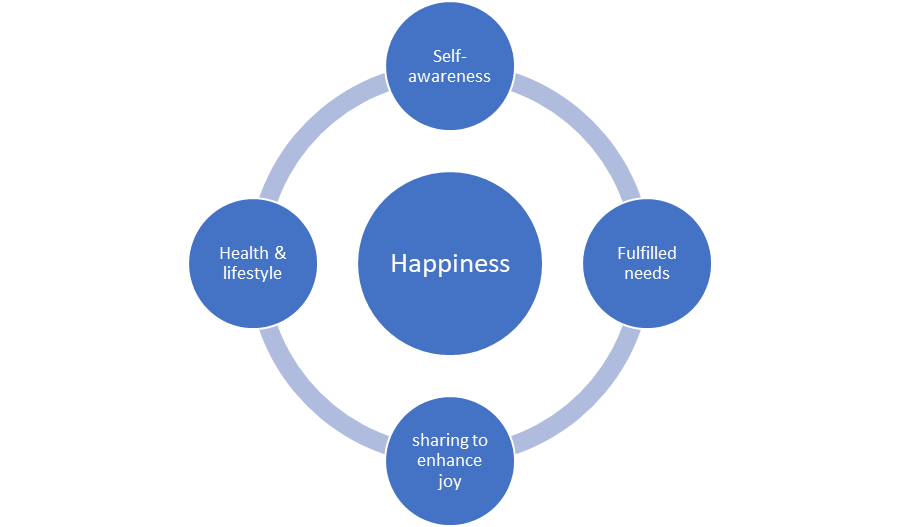
Cycle of Happiness
3. What Holds Me Back from Happiness?
Even with a clear understanding of what you value and what facilitates your happiness, obstacles can still stand in the way. Overcoming these barriers often requires deep introspection:
- How well do I know myself?
Self-knowledge is crucial for making decisions that align with your true desires. Trusting your judgment, especially in important matters, is essential for happiness. Doubt and indecision can lead to missed opportunities and regret. - What matters most to me?
Prioritizing what truly matters is key. Life is full of distractions and demands, and it’s easy to lose sight of what’s important. Regular reflection on your values and goals can help you stay on track. - Do I know what true happiness looks like for me?
Happiness is not one-size-fits-all. It’s important to define what happiness means to you personally, rather than adopting someone else’s definition. This might involve re-evaluating your life goals and making adjustments as needed. - Who do I share my happiness with?
Humans are inherently social beings, and sharing happiness with others can amplify your joy. Building strong, supportive relationships is not only important for your happiness but also for the happiness of those around you. Joy shared is joy multiplied, creating a positive feedback loop that enhances well-being for everyone involved.
Conclusion
Happiness is a journey, not a destination. It requires continuous self-reflection, growth, and a deep understanding of what you value most in life. By developing self-awareness and focusing on the aspects of life that truly matter to you—whether it’s relationships, freedom, health, or personal growth—you can create a life that is not only happy but deeply fulfilling. Remember, true happiness is not just about feeling good; it’s about living a life that feels right for you, a life that resonates with your innermost values and desires.